You’ve probably heard the terms STEM and STEAM used in education, but what do they actually mean?
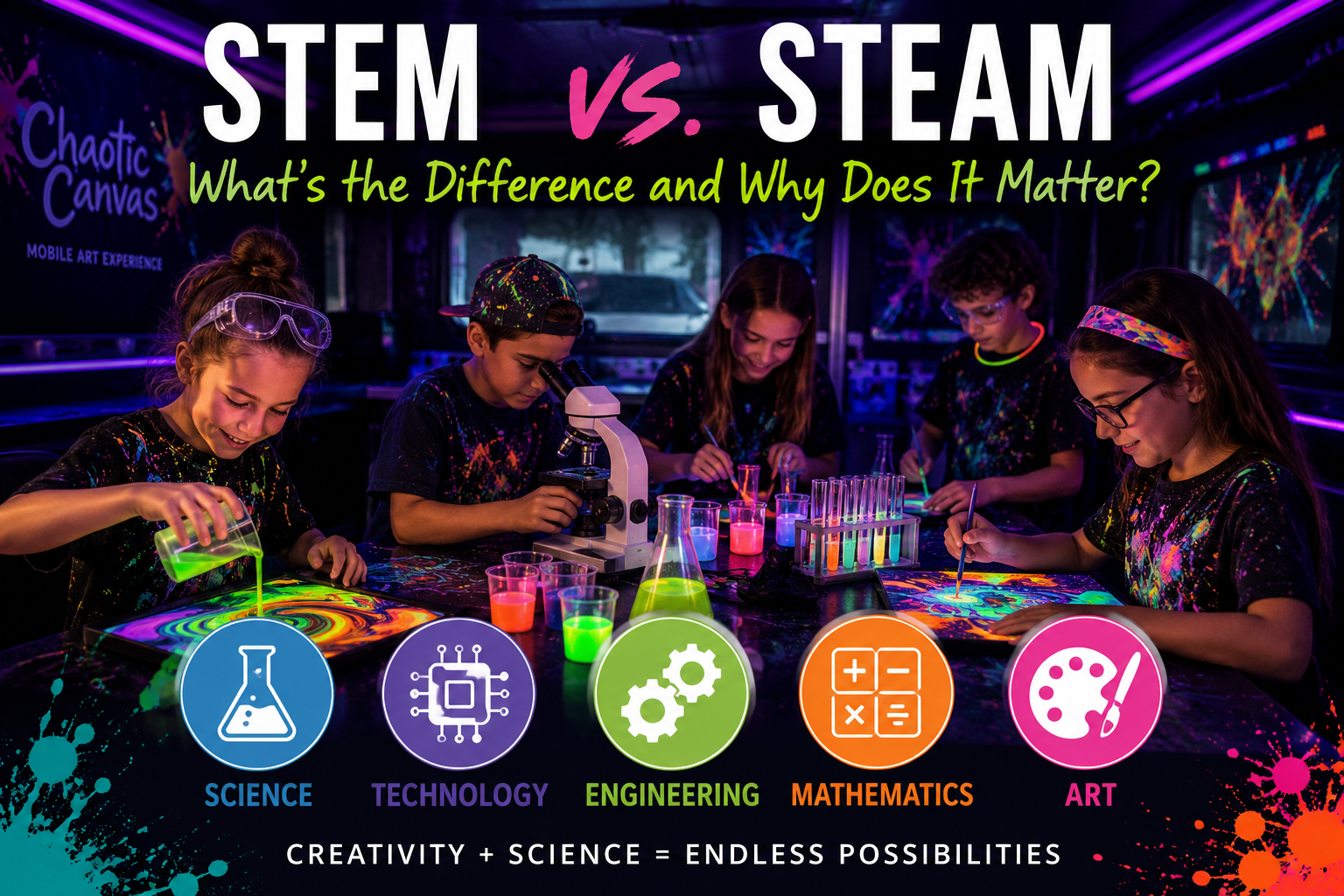
STEM stands for Science, Technology, Engineering, and Mathematics. STEAM includes all of those subjects but adds Art as an essential component of learning.
The addition of art encourages creativity, innovation, problem-solving, and self-expression alongside scientific exploration.
At Chaotic Canvas, we believe some of the most meaningful learning happens when students can experiment, create, and discover through hands-on experiences.
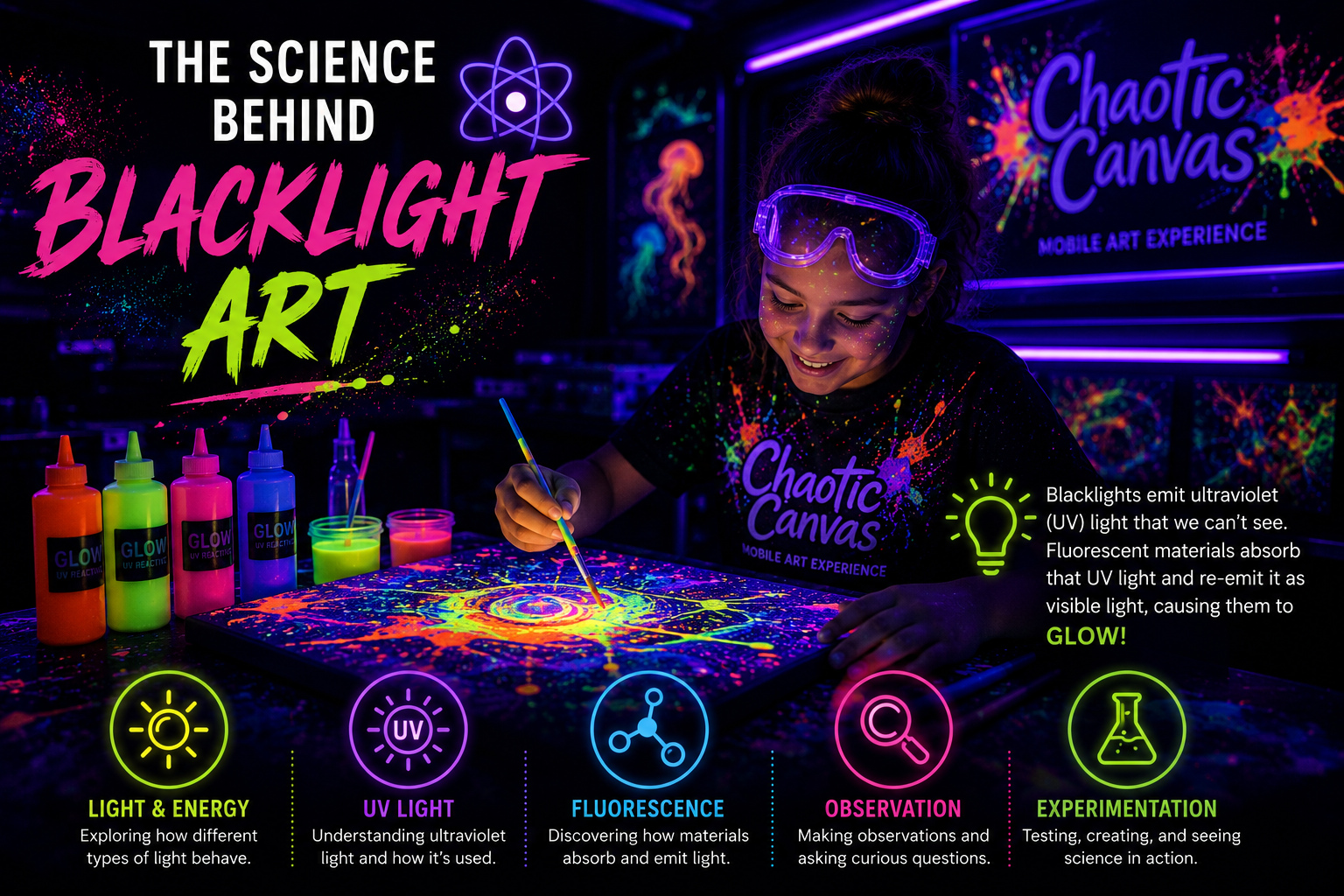
When students explore fluorescence through blacklight art, investigate fluid dynamics through acrylic pouring, or learn about color theory through creative projects, they are engaging in STEAM learning. They are combining scientific concepts with creativity and artistic expression.
STEAM education helps students develop:
- Critical thinking skills
- Problem-solving abilities
- Creativity and innovation
- Observation and experimentation skills
- Confidence in trying new things
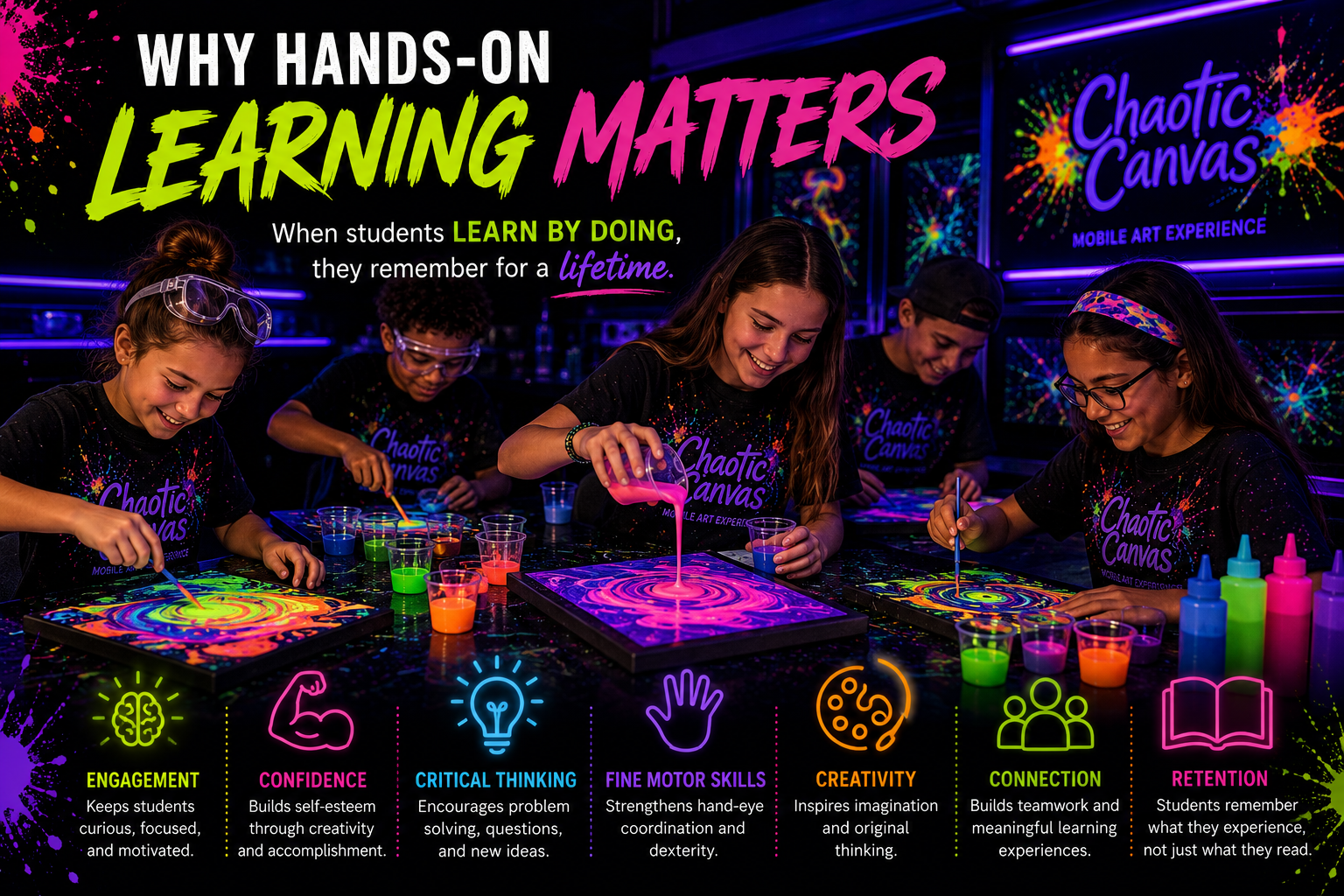
Learning isn’t just about memorizing information. It’s about exploring ideas, asking questions, and discovering how concepts work in the real world.
That’s why our experiences are designed to help students learn by doing.
Because learning shouldn’t just be something students read about—it should be something they experience.