Think back to something you learned years ago that you still remember today.
Chances are, it involved doing something rather than simply reading about it.
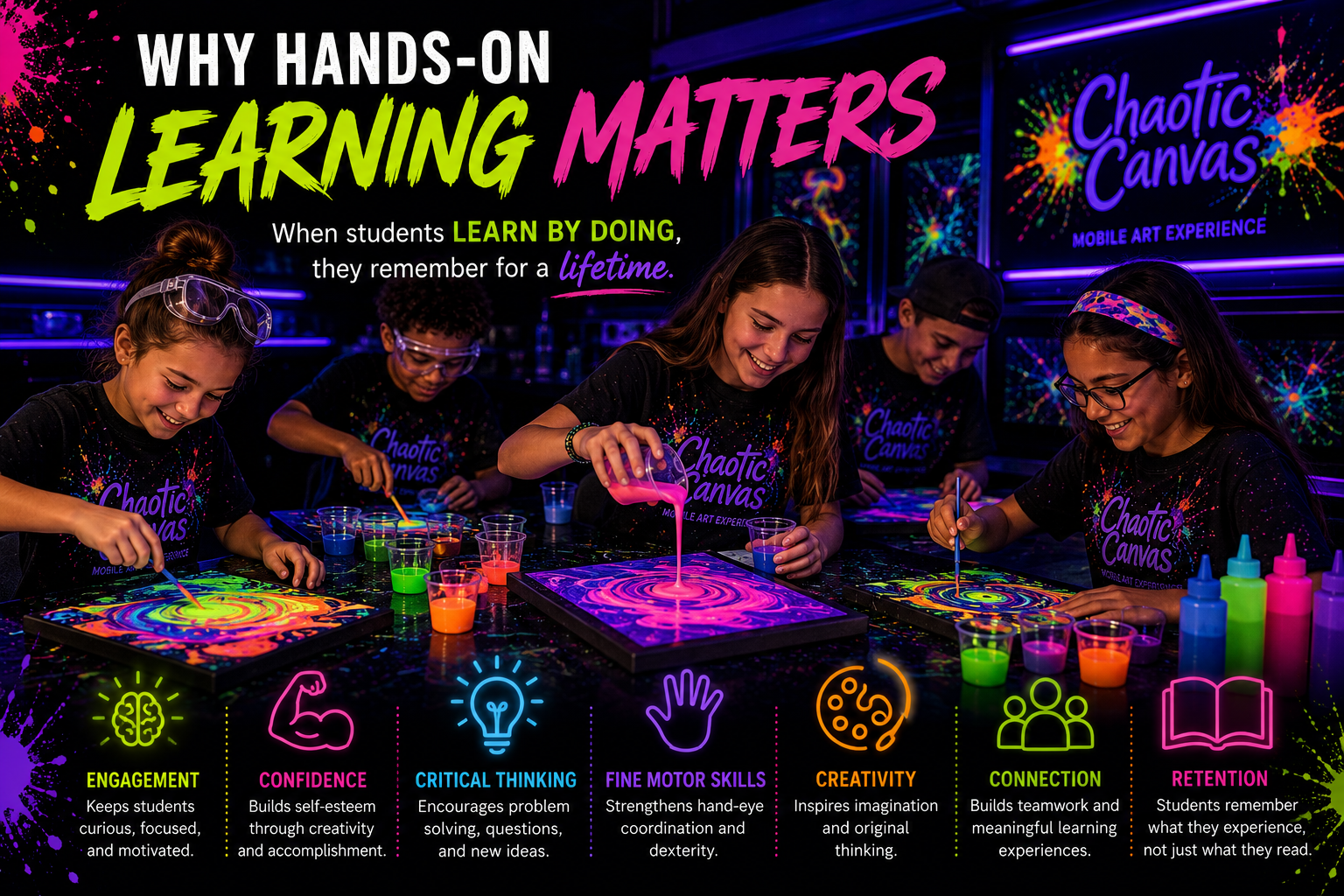
Hands-on learning encourages students to actively participate in the learning process. Instead of being passive observers, they become explorers, creators, and problem-solvers.
Research consistently shows that active learning can improve engagement, retention, and understanding.
Hands-on experiences help students:
- Stay engaged and focused
- Build confidence
- Develop critical thinking skills
- Strengthen creativity
- Improve fine motor skills
- Make meaningful connections between concepts
At Chaotic Canvas, we believe learning should be interactive, memorable, and fun.
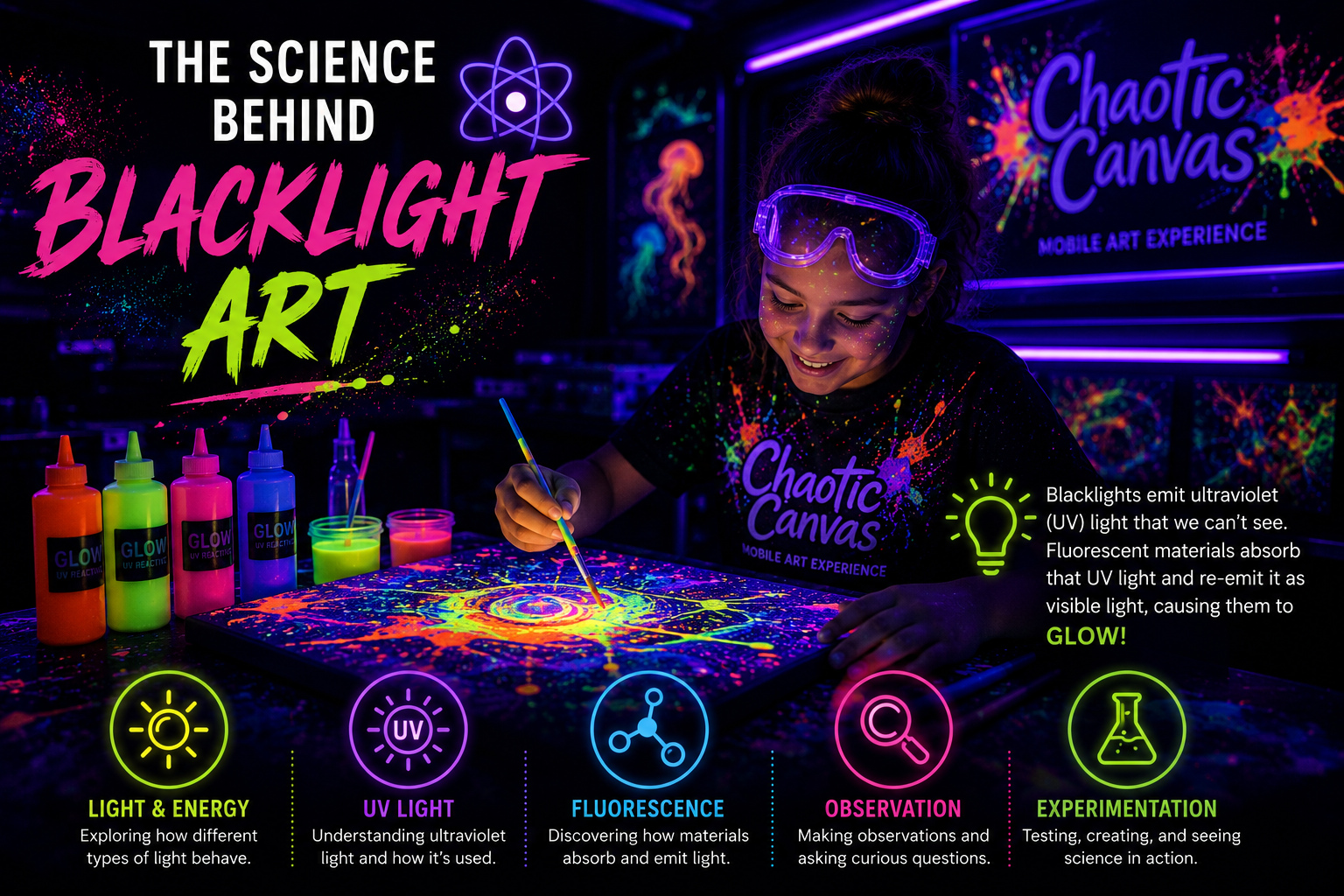
Whether students are exploring light and color, creating through motion and action painting, or experimenting with fluid dynamics through acrylic pouring, they are actively participating in the learning process.
Every splash, swirl, and experiment becomes an opportunity to learn.
Because education is most powerful when students can experience it for themselves.