Have you ever wondered why certain colors seem to glow under blacklight?
The answer lies in a fascinating scientific concept called fluorescence.
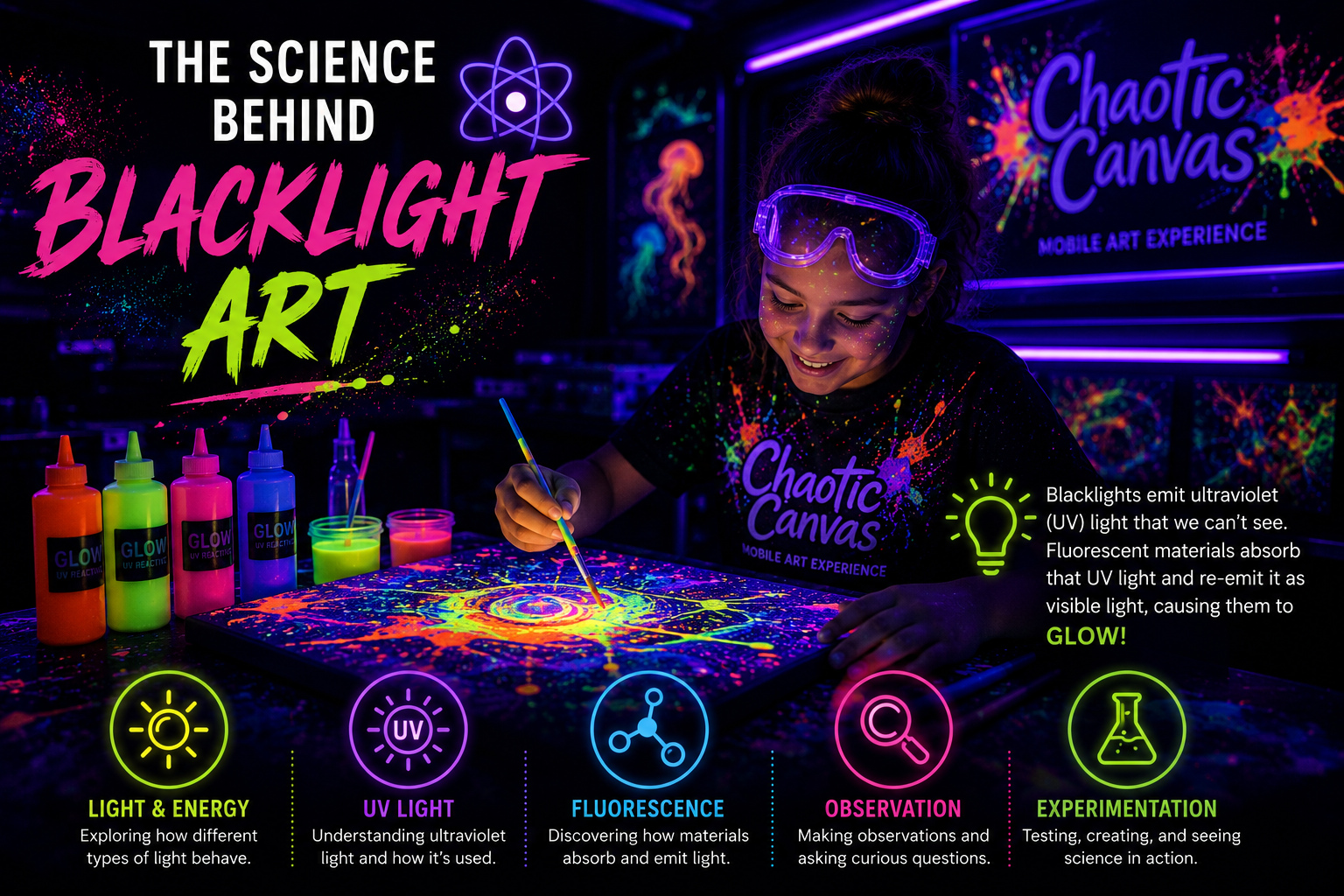
Blacklights emit ultraviolet (UV) light, which is mostly invisible to the human eye. Certain materials absorb that UV light and then release it as visible light, causing them to appear bright and glowing.
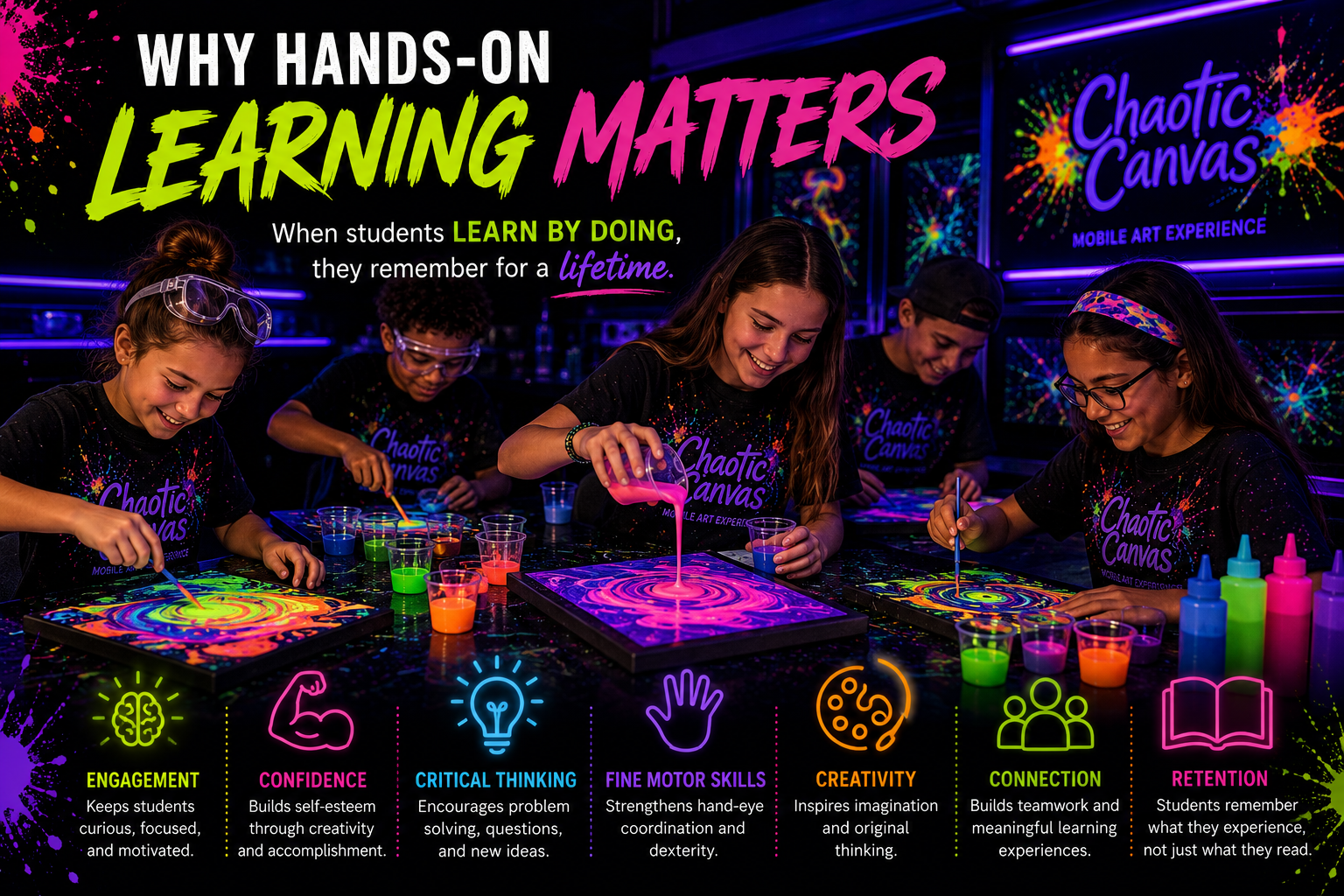
In our Glow Theory Lab™ and Blacklight Science Lab™, students explore these concepts through hands-on observation and experimentation.
As students create artwork using fluorescent paints, they learn about:
- Light and energy
- Visible and ultraviolet light
- Fluorescence
- Observation and scientific inquiry
- Cause and effect
Students don’t just hear about science—they see it happen right in front of them.
The combination of art and science creates a memorable learning experience that encourages curiosity, exploration, and creativity.
Sometimes the best way to understand a concept is to experience it firsthand.